Saturday, April 18, 2015
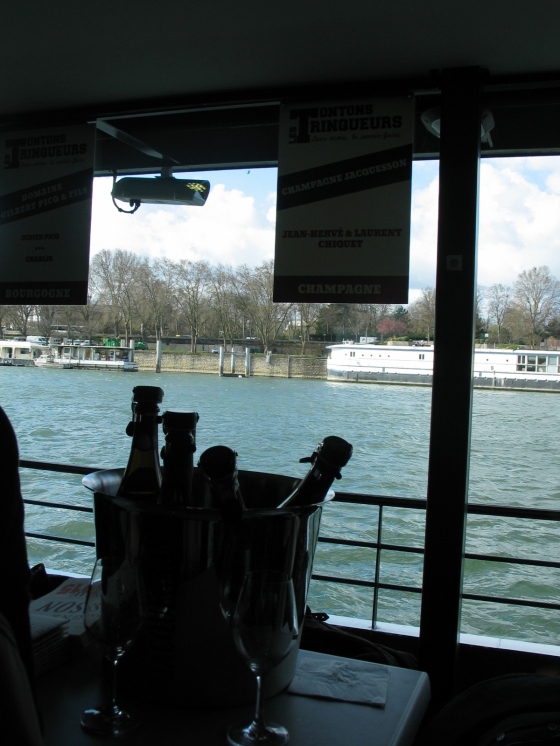
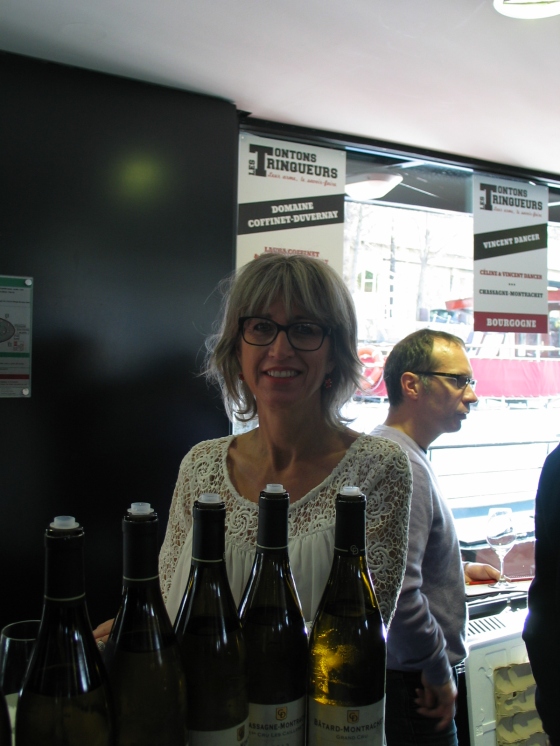
Les TonTons Trinqueurs Edition 2015
L’Institut Paul Bocuse Celebrates Its 25th Year
...nouvellement créé, ce programme de 11 semaines est destiné à celles et ceux qui souhaitent créer et diriger leur restaurant. L'Institut paul Bocuse a initié un partenariat avec CCI Formation Lyon et collabore avec l'uMIH Formation. 10 stagiaires amateurs en reconversion (40 ans de moyenne d'âge) viennent de la France entière, de l'étranger et d'horizons très divers (chef de vente, directeur commercial et marketing, informaticien, DRH, médecin, etc.). L'objectif de l'Institut paul Bocuse est d'inscrire ce programme au Registre national de la Certification professionnelle (RnCp) dans les 3 ans.
Le restaurant gastronomique Saisons Ouvert au public, ce restaurant pédagogique permet aux étudiants d'évoluer en situation réelle et ainsi d'acquérir les connaissances nécessaires à l'exigence des métiers de la restauration gastronomique.
#ParisFoodAndWine
#LocalFoodAndWine
Monday, April 13, 2015
La Bonnotte of Ile de Noirmoutier - The World's Most Expensive Potato
La Bonnotte, for those of you not familiar with it, is a little yellow gem that grows on the small, sheltered Isle of Noirmoutier in France's northwest region of the Vendée. And while myself and other culinary gourmands can easily mistake this little tuber for the Royal Star of Paris diamond, it is, in fact, entirely edible. Yes, this little tuber is a potato... île de Noirmoutier... Read my full article HERE
Its tubers have smooth, yellow skin and dark yellow flesh, finely grained. They are round, and the eyes are semi-sunken. The plant is sizeable and upright with a pigmented stalk and fairly short leaves, marked with a very glossy dark green. The leaflets have an embossed aspect. The flowers are small and white, and the fruits are reddish. It is resistant to potato wart and also, it seems, to degeneration disease. Its period of dormancy is quite long and it is also fairly slow to sprout – a delay it catches up on later. - Diehl

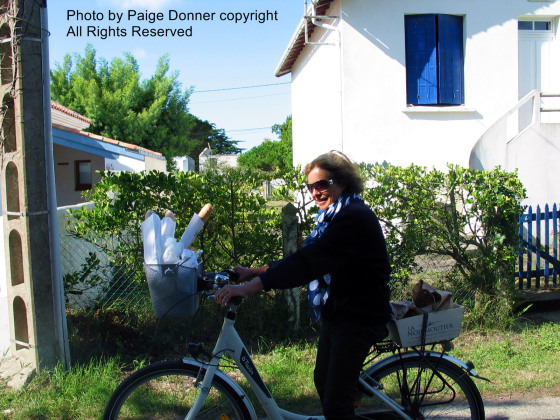
- Ile de Noirmoutier - Lady on bicycle with baguette. Photo by Paige Donner copyright 2014 all rights reserved. Find More of Paige's photography here: http://paigedonnerphotography.wordpress.com
FOLLOW US ON TUMBLR * FOLLOW US ON TWITTER * LIKE US ON FACEBOOK
Friday, April 3, 2015
Paris GOODfood+wine - Episode 4
Episode 4
- Climats de Bourgogne by Paige Donner - Interview with Guillaume D'Angerville
- Emily Dilling Interview by Paige Donner - In studio interview with our GOODfood+wine fresh market reporter
- Chef Singer (formerly) of Le Cordon Bleu Cooking School Paris - Interview by Gabrielle Mondesire
- Restaurant Review L'Amarante - Paige Donner interviews Alec Lobrano, Paris restaurant critic, in-studio
Episode 4 airs on World Radio Paris on April 5th, Easter Sunday, at 11am. Listen for it at the same time the rest of the month or on-demand, streaming at WorldRadioParis.fr/listen-again
In this episode of Paris GOODfood+wine ….
Paige Donner hosts and produces Paris GOODfood+wine.
And by the generous support of Paris Food And Wine
@LocalFoodWine
Follow us On Tumblr * Follow Us On Twitter * Like Us On Facebook
♥Chérie Du Vin
Friday, March 13, 2015
Lanson Black Label - preview
This is one of the best videos I've yet seen released by a champagne house.
It's by Lanson and it previews their Black Label cuvée. It also introduces their new cellar master. It's brief and to the point. Every bit worth watching.
Follow us On Tumblr * Follow Us On Twitter * Like Us On Facebook
Saturday, March 7, 2015
Paris GOODfood+wine Episode 3 on World Radio Paris
- The Ortolan, considered a (forbidden)delicacy in certain circles in SWest France.
- Photo courtesy ParisPaysanne.com/ Emily Dilling
Follow us On Tumblr * Follow Us On Twitter * Like Us On Facebook
Wednesday, February 11, 2015
Episode 2 GOODfood+wine aka Paris GOODfood+wine Airs February 15th
Episode 2 GOODfood+wine aka Paris GOODfood+wine Airs February 15th 2015
EPISODE 2 AIRING ON WRP Sunday, February 15th, 2015
- Krug Sounds
Follow us On Tumblr * Follow Us On Twitter * Like Us On Facebook
Tuesday, December 30, 2014
Pacherenc du Vic-Bilh AOC – The Other Sweet French Wine
by Paige Donner
The World of Wine has endless gems in store for you to discover. That is what's so riveting about continuing along the path of wine exploration. Just when you think you've come across most of France's highlights, there are still more yet awaiting your discovery.
Pacherenc du Vic-Bilh is one of these wines. In a culture that tends to evoke the wines of Sauternes and Barsac when discussing sweet wines, this is a lovely discovery that comes from a different region in France, the Southwest. AOC Pacherenc du Vic-Bilh is just 40 km from Pau and in fact faces the Pyrénées.
The real difference of this sweet wine is not the time of its harvest, as it's harvested late in the year, from mid-November up until mid-December, similar to other sweet wines and much like the famous German and Canadian ice wines. No, the real difference is that these wines take their sweetness from their maturation and not from botrytis (noble rot).
The first historical reference to this wine, Pacherenc du Vic-Bilh, is from 1745 in a document found that forbids harvest that year before November 4th in this particular region of Southwestern France. That year the harvest took place mid-November during what's known as a sort of Indian Summer in that area of France, locally called the Summer of Saint Martin, l'été de la Saint-Martin.
Named after the festival day during that Indian Summer, the cuvée Saint-Albert 2012 made by Alice and Paul Dabade (Barrique and Lot 7.1-7.2-7.3-7.4) is exemplary of this AOC Pacherenc du Vic-Bilh sweet wine. It's a blend of Gros Manseng, Petit Manseng and Petit Courbu. It was harvested late in 2012, starting December 12.
For the bouquet you can expect rhubarb and mandarin orange. On the mouth, the silky suaveness of the sweet is balanced nicely by a fresh acidity that hits you on the finish. As it ages it picks up notes of white truffles. If you like sweet wines this is truly one of the privileged sweet wines and relatively unknown simply because so little of it is produced.
Pairs well with foie gras and Roquefort; Also as an aperitif. For dessert it goes nicely with a fruit pie or tart and also light fresh sorbets such as passion or lemon. Serve 8-10°C.
Awards: Gold Medal, 2013, Paris Agricultural Fair
@LocalFoodWine
Follow us On Tumblr * Follow Us On Twitter * Like Us On Facebook
Monday, December 29, 2014
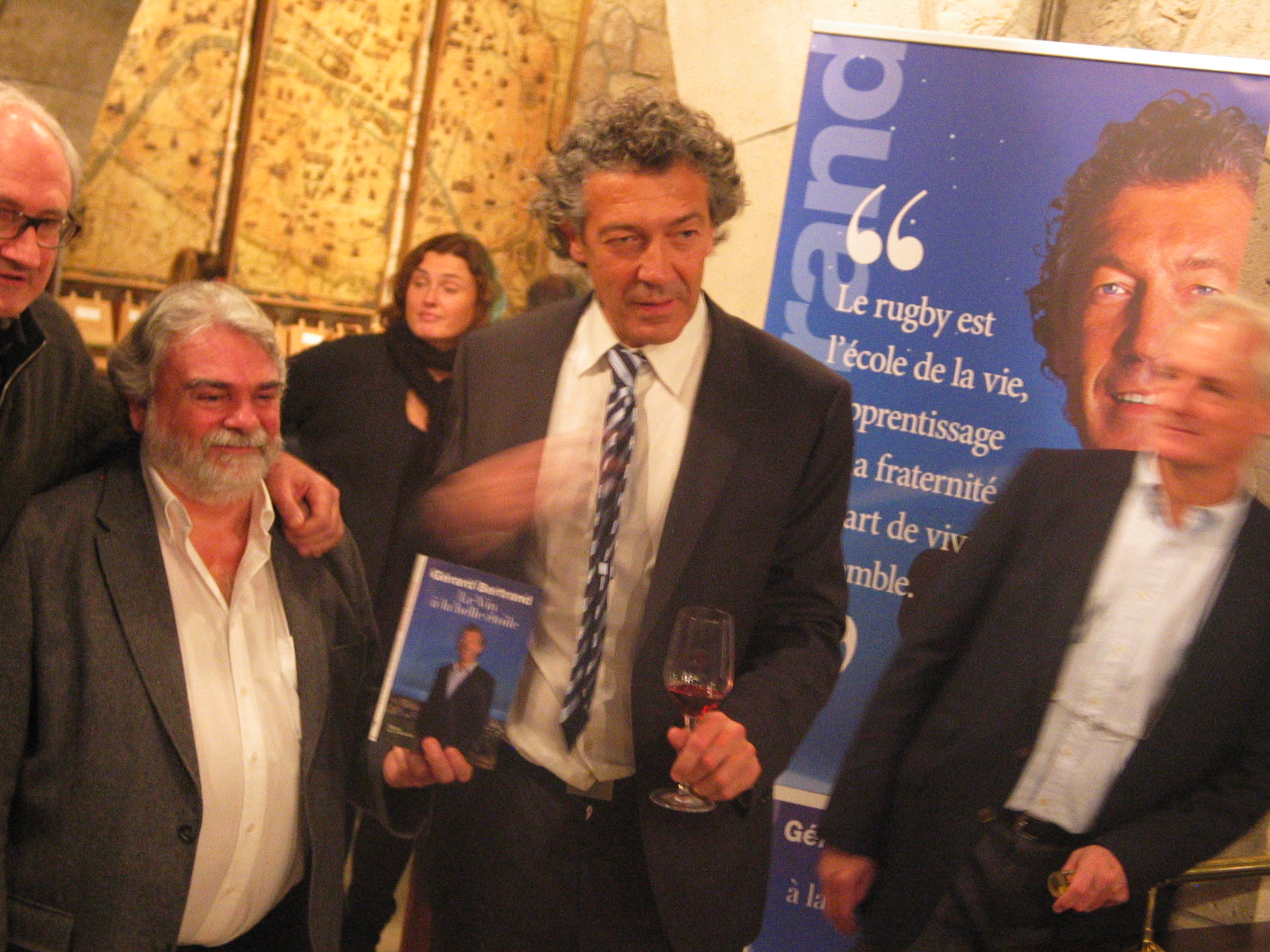
Gérard Bertrand’s Book About His Life In Wine
All photos by Paige Donner ©
SEE The FULL PHOTO GALLERY on Chérie du Vin
Gérard Bertrand is one of those rare Frenchmen in wine - a former rugby star who took over the family business of wine when he retired from his illustrious sports career. Since his father George's death, Gérard has overseen the vast family business entirely, even launching the brand with considerable success into the US market in 2011.
A champion of bio-dynamic wines, Bertrand is also one of the biggest grower-producers in France's Languedoc region, a region that has historically been considered the wine barrel of France for its sheer volume of production.
At his recent book launch at Faust in Paris, celebrating the release of his new book, Le Vin à la belle étoile, celebrated personalities from both the fields of sports and wine, as well as the Parisian demi-monde, came out to congratulate him - and to sip some of his new releases from his more celebrated estates of Cigalus (bio-dyanamic), Domaine de l'Aigle, and the wine from the Bertrand family estate, Domaine de Villemajou.
If Domaine de Villemajou was a person it would be a generously proportioned Mediterranean woman with lots of charm to illustrate its rounded, silky, fine tannins.
The eight hectares that make up the plots of Villemajou are referred to as La Forge. These plots were Georges Bertrand's, Gérard's father's, favorite of his estates. It is part of the inland terroir of the Boutenac region in Corbières. These Villemajou plots, La Forge, reside on a Miocene hilltop. The blend of the wine is of two emblematic regional varieties, Syrah and Carignan.
FOLLOW US ON TUMBLR * FOLLOW US ON TWITTER * LIKE US ON FACEBOOK
Friday, November 28, 2014
Café en Capitale - Christmas Cakes from Chef Yannick Alléno
by Paige Donner
As noted earlier this month, Parisian chefs have a sweet tradition of rolling out their Christmas cakes, their Bûche de Noël (Christmas Yule Logs) here even before we in the U.S. have celebrated Thanksgiving. It's a charming custom and one that inspires much creativity amongst them. It's sort of like the grand unveiling of what myriad forms flour, sugar, chocolate, mousse, fruits and other sweet delectables can take on within the imaginations of these great chefs and the skillful execution of their staff.
It's also the sign, at least in the Parisian culinary world, that the Holiday Season has begun!
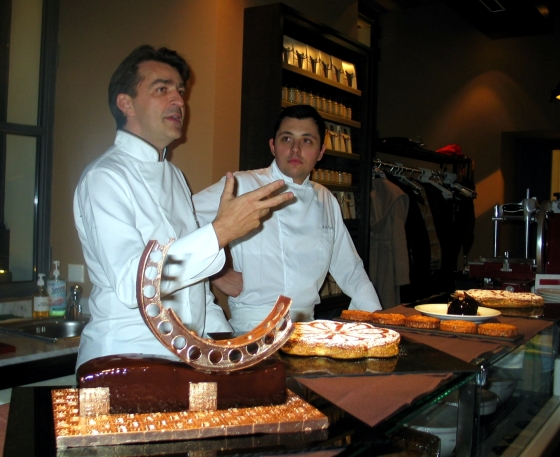
This year, Chef Yannick Alléno, one of France's most distinguished chefs, paid tribute to his terroir, Paris, in his re-imagining of these customary holiday cakes. He harkens from île-de-France, the county that encompasses the city of Paris, and has built a career and his successful brand upon highlighting what he calls Terroir Parisien.
Thank you for reading this so far. Please support our Paris GOODfood+wine reporting by subscribing to us HERE. Thank YOU!
For this year, his Christmas gateaux (cakes) have taken on the role of representing, in delicately edible patisserie form, several of the great monuments of Paris.
Café en Capitale
The café gourmand is a dessert that you will find on many French menus. It's a delightful little smattering of bite-sized desserts, often miniatures of the full portioned desserts on the menu. It's served with coffee and is a nice dessert to share or also have when you're too sated by a good meal to devour more than just a few nibbles afterwards.
Alléno's twist, however, is to shine a spotlight on three of Paris's beautiful monuments, namely the Grand Palais, the Opéra Bastille and the Notre-Dame and offer each of these namesake cakes in turn, consecutively, throughout the holiday season.
Let The Sweet Festivities Begin!
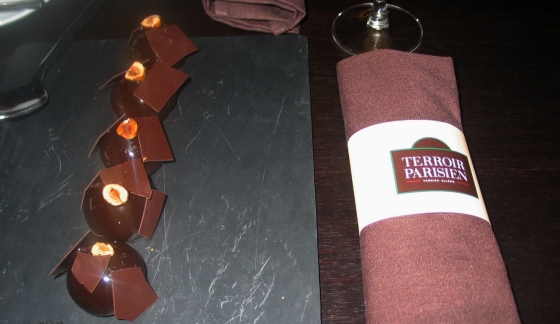
l'Opéra Bastille
And it all starts on December 1st. Beginning on the 1st of December you will be able to enjoy l'Opéra Bastille at Alléno's Bourse district Terroir Parisien. Of course, the famous pâtissier, Gaston Le Nôtre is who created the even more (now) famous cake, l'Opéra. The form of this small, just a bit bigger than bite-size very chocolate délice with a creamy center, pays tribute to the dome of the Opéra Bastille, the landmark theater which crowns the Place de la Bastille. This dessert will be served with coffee following lunch or dinner at the popular bistro in the 2nd arrondissement.
La bûche du Grand Palais
Ah, now for the main act... The form of this cake, crowned with a remnant of the celebrated Parisian monument, the Grand Palais (albeit in patisserie, not in actual steel or concrete!) has a heart of pear from Ile-de-France that is covered, actually, nearly smothered and entombed, in chocolate. The metal edifice of the Grand Palais, the creative child of Gustave Eiffel, is what is represented by this avant-garde cake decoration. Even the presentation of the cake pays homage to the metal-work detailing of Eiffel's in this monument of and to Paris that is the Grand Palais.
*These cakes can be ordered for takeaway as well when ordered in advance.
La Galette du Parvis de Notre-Dame
After the New Year, here in France there is another cake that you will see in all the bakeshop windows: it is called the galette du Roi. It celebrates Epiphany or the arrival of the Three Wise Men in Bethlehem. You can read more about the tradition here. The cakes are much-loved by children because of the little fève (which translates as bean but is really a little ceramic lucky token) that is placed inside each cake which bequeaths the winning slice with a wish come true.
The form of Alléno's Galette Notre-Dame is in the form of the celebrated rosette window, the rosace, of the Cathédrale Notre-Dame. And rather than filled with just the traditional almond paste, here you will find a mixture of chocolate-almond paste. It's like Alléno and his patisserie team really just couldn't get enough chocolate this year. And Hallelujah for that! This rosace form represents as they appear at Notre Dame flowers of Paradise and rose petals. "It's a treasure hidden inside an historical holiday cake tradition."
Le Montsouris
And last, but certainly not least, is the bite-sized flaky cake-cookie, Le Montsouris. This creation is dear to Alléno's heart because of its inspiration: the very last farm that exists within the city of Paris is set to soon be demolished. This farm is in the 14th arrondissement at 26 à 30 rue de la Tombe-Issoire and is the last of over 450 such farms that once existed within Paris city limits (until about 1895 when they started to be demolished and buildings constructed in their place). Since Alléno is devoted to creating his cuisine with local produce, he wanted to pay homage to this last Parisian farm before it slipped into our collective distant memory. The flaky cookie-cake is filled with apple compote.
TIP: The first 300 Galette Notre-Dame sold offer the chance of winning a dinner for two at Alléno's newest restaurant, the elegant Pavillon Ledoyen. There is one extra winning fève (token) hidden inside one of the first 300 galettes. (Yes, sort of like Willy Wonka and the Chocolate Factory : ) ). To hear a review of this restaurant, listen to my upcoming Paris GOODfood+wine episode on World Radio Paris.
And for a chance to taste or take away any or all of these cakes mentioned here, go to Terroir Parisien, at either location 28 Place de la Bourse or 20 rue Saint Victor.